
The High-Level Meeting on European Research and Innovation for Rare Diseases (HLM Rare 2025) convened senior leaders from science, healthcare, patient organisations, industry, and EU institutions with a clear objective: to move Europe’s rare disease ecosystem from fragmented progress to coordinated delivery.
Led by the Brains for Brain Foundation, the meeting brought together stakeholders spanning clinical research, European Reference Networks (ERNs; learn more here), patient advocacy groups, regulators, and policymakers. The ambition was explicit and shared—to accelerate diagnosis, improve access to therapies, and align investment and policy through a pan-European Declaration that could reshape rare disease research and care across all 27 EU Member States.
The programme was structured around three strategic pillars, each addressed over a dedicated day.
Day 1: Research and innovation. Discussions centred on closing gaps in Europe’s clinical research landscape and strengthening its global competitiveness. Leaders from organisations including the EMA, HaDEA, and EU institutions explored how to streamline clinical development, improve trial readiness, and better connect scientific discovery with patient benefit.
Day 2: Infrastructure and skills. Attention shifted to the foundations needed to sustain innovation at scale, with a strong focus on the ERNs. Sessions addressed data and artificial intelligence, newborn screening, registries, and workforce development. A highlight was a high-level panel featuring Vytenis Andriukaitis, Nathalie Moll, and Professor Maurizio Scarpa, which examined how cross-sector collaboration can underpin a modern, integrated rare disease system in Europe.
Day 3: Policy and funding. The final day focused on enablers—regulatory pathways for earlier patient access, the case for an EU-wide Action Plan for Rare Diseases, and how future EU budgets could be aligned to support these goals. Central to these discussions was the launch of work towards a European Declaration designed to guide priorities, incentives, and resource allocation across Member States.
For individuals and families living with Homozygous Familial Hypercholesterolaemia (HoFH) and Familial Chylomicronaemia Syndrome (FCS), the outcomes of HLM Rare 2025 are particularly relevant. These rare inherited lipid disorders are often marked by delayed diagnosis, limited specialist expertise, and uneven access to advanced therapies.
The meeting’s emphasis on faster diagnosis, data-driven innovation, strengthened ERNs, and more predictable access pathways directly aligns with the unmet needs of the HoFH and FCS community. A more coordinated European approach offers the prospect of earlier identification, more consistent standards of care, and improved access to specialist treatment across borders.
A strong and unified patient voice
Patient organisations played a prominent role throughout the meeting. Retina International and EURORDIS, represented by Avril Daly, stressed the importance of a unified stakeholder community to drive an EU Action Plan or Mission, emphasising that scientific advances must translate rapidly into real-world benefits for patients.
ERN BOND highlighted the significance of the intensive three-day programme, noting that the emerging Declaration represents a concrete step towards aligning research, infrastructure, and access. The International MPS Network reinforced this message, underlining the Declaration’s potential to create clearer innovation pathways and improve access to therapies. Collectively, these contributions reflected a shared commitment to collaboration, acceleration, and patient-centred outcomes.
One of the clearest messages from both the formal agenda and side discussions was that public–private collaboration is no longer theoretical—it is already delivering results and should now be scaled.
Examples cited included EFPIA’s Rare Disease Moonshot, which demonstrates how structured public–private partnerships can address research gaps, accelerate clinical development, and create system-level solutions through aligned incentives and shared infrastructure. Similarly, Together4RD showcased ERN–industry pilots that have moved from concept to implementation. A notable example was the collaboration between ERN EuroBloodNet and Takeda on an AI-supported diagnostic pathway for thrombotic thrombocytopenic purpura (TTP), alongside further pilots on registries and diagnostics discussed at WODC Europe.
The consensus was clear: these “moonshot-style” initiatives are already in motion and generating value. With robust governance, transparency, and data-sharing frameworks, they could be expanded across ERNs to deliver consistent, Europe-wide impact.
Common practices as the backbone of scale
Another consistent theme was the need for common practices and shared platforms as the foundation for progress in rare disease care. Interoperability and harmonisation were repeatedly identified as prerequisites for effective cross-border care and for multinational clinical trials coordinated through the ERNs.
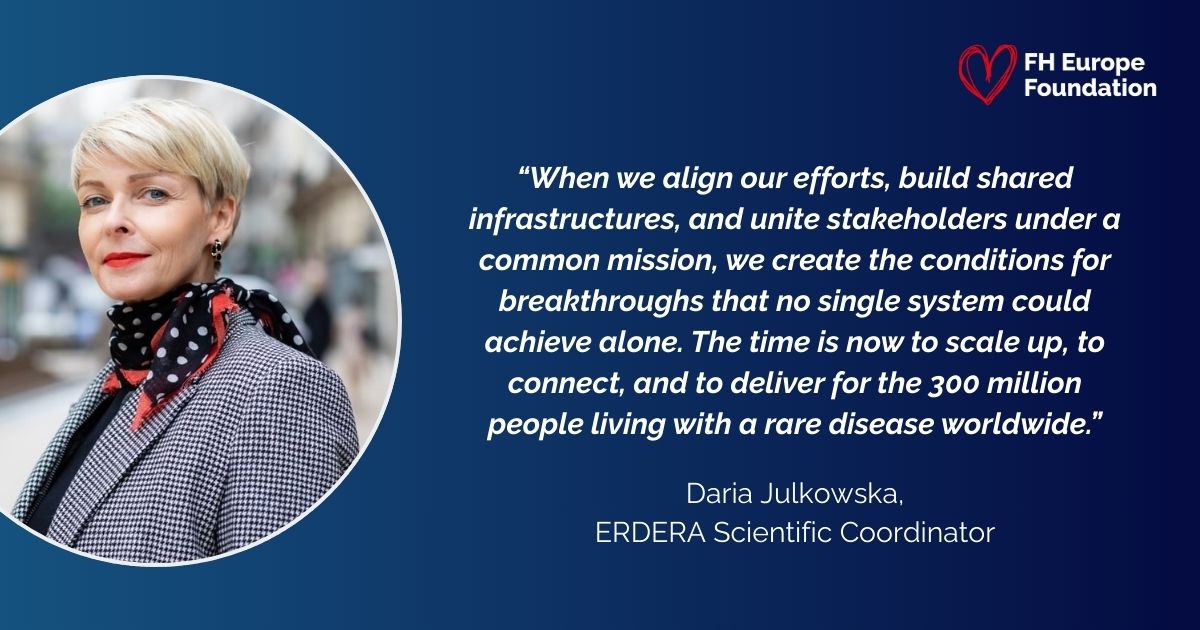
Discussions highlighted the importance of dedicated operating platforms for registries, consent, data standards, and evidence generation. Sessions on the European Health Data Space (EHDS), data-driven innovation, and real-world evidence reinforced the case for interoperable data infrastructures. Leaders from ERNs and collaborative initiatives such as ERDERA and Together4RD described ongoing work to develop templates for partnerships, data reuse, ethics, and conflict-of-interest management—helping shift Europe from isolated pilots to portfolio-level collaboration.
Skills are as strategic as technology
Day 2 also underscored that infrastructure alone is insufficient without a sustainable skills pipeline.
Donata Meroni, Head of Unit B3 ‘Health monitoring and cooperation, Health networks’ at the European Commission, emphasised workforce development and capacity building, pointing to the potential of ERN Academy-style models and structured upskilling for rare disease professionals. Professor Marta Mosca, Coordinator of ERN ReCONNET, illustrated how guidelines, registries, and multidisciplinary care models can be translated into scalable capacity across Member States.
The conclusion was unambiguous: a formalised ERN Academy, harmonised training pathways, and protected, funded time for clinicians are prerequisites for any sustainable EU-wide operating model.
Connecting stakeholders for impact
The fireside chat with Vytenis Andriukaitis, Nathalie Moll, and Professor Maurizio Scarpa—under the theme “Connecting stakeholders for impact: building the infrastructure of a modern rare disease Europe”—distilled many of the meeting’s core messages. The panellists argued for moving decisively beyond fragmented initiatives towards structured public–private partnerships that align goals, data, and infrastructure from the outset, supported by common practices and shared governance.
Looking ahead: alignment with the Cypriot EU Presidency
Building on the momentum generated in Brussels, strengthening collaboration with leaders shaping Europe’s research and health agenda is now a strategic priority. In this context, our CEO had the opportunity to meet with Dr Konstantinos Kleovoulou and Professor Leonidas Phylactou, ahead of the upcoming Cypriot EU Presidency and our own High-Level Meeting under the auspices of Cyprus.
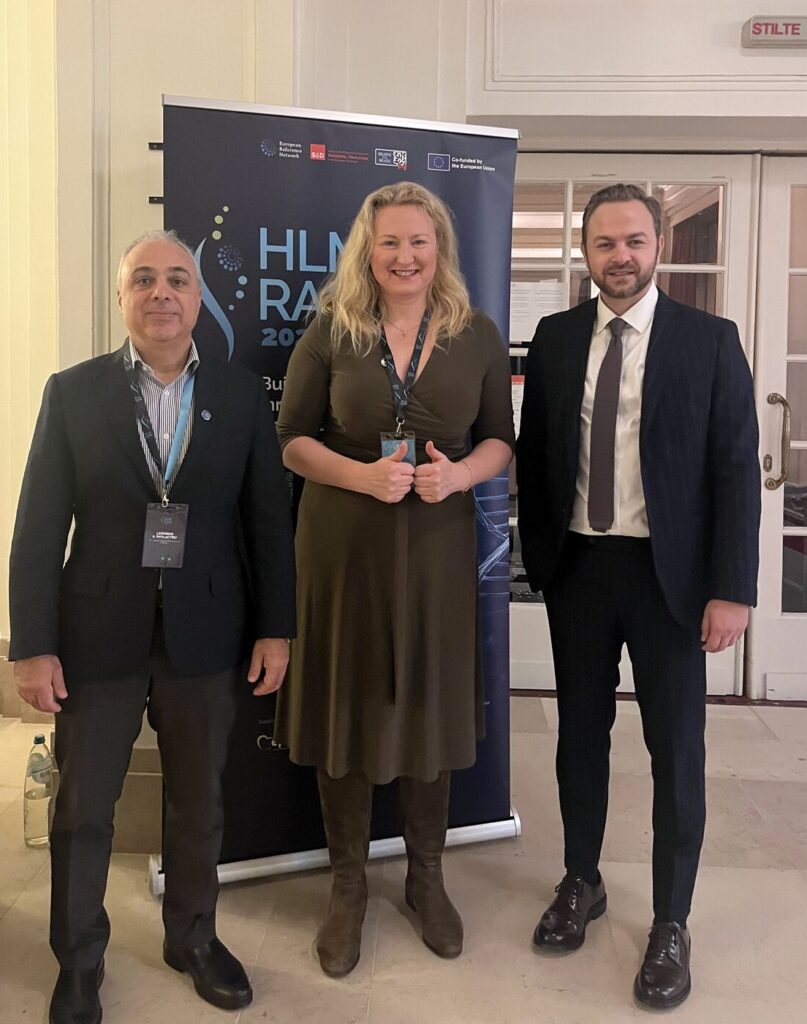
These discussions underscored the importance of continuity between EU-level policy ambition and national leadership in research and innovation. As Cyprus prepares to play a more prominent role in shaping Europe’s agenda, aligning priorities around rare diseases—particularly in areas such as research coordination, data infrastructures, and equitable access to innovation—will be essential to translating the European Declaration from intent into implementation.
From alignment to action
HLM Rare 2025 marked a shift in tone and intent for Europe’s rare disease community. The emerging European Declaration provides a focal point for translating shared ambition into coordinated action—directing resources, aligning incentives, and enabling equitable access to innovation across all Member States.
For rare disease communities, including those affected by HoFH and FCS, the message is clear: Europe is moving from vision to delivery. The challenge now is to sustain momentum and ensure that commitments made in Brussels—and reinforced through upcoming EU Presidencies—translate into measurable improvements in diagnosis, care, and outcomes for patients across Europe.
Prepared by
 Elsie (Cindy) Evans,
FH Europe Foundation Ambassador Programme Manager