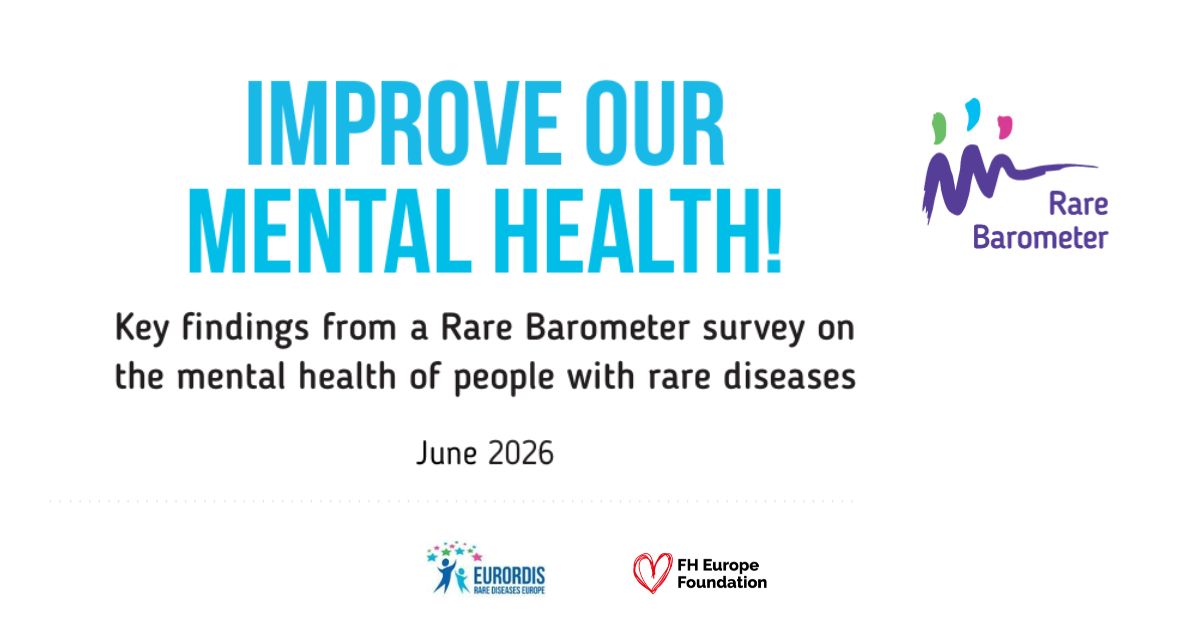
Across Europe, more than 30 million people live with a rare disease. For many, the challenges extend far beyond physical symptoms—impacting emotional well-being, family life, and everyday resilience. A recent EURORDIS Rare Barometer survey shines a spotlight on an often-overlooked reality: the mental health burden within the rare disease community.
What the data tells us:
Between September and December 2025, nearly 9,900 people living with a rare disease, along with family members, shared their experiences. The findings are clear and concerning:
- High levels of anxiety, depression, and loneliness
- Significant reports of emotional distress
- Evidence of suicidal ideation among some respondents
These are not isolated experiences—they point to a systemic issue. Mental health challenges are deeply intertwined with living with a rare condition, yet they are often under-recognised in care pathways and policy frameworks.
At FH Europe Foundation, we know that living with inherited lipid conditions is about more than managing lipid levels. It can bring
uncertainty, fear, and long-term stress, and this is specifically true for our FCS and HoFH communities, where social stigma, lack of awareness, and the chronic day-to-day of living with these conditions impact daily life—for both individuals and families. During our Annual Meeting in 2025, we had sessions for our participants specifically focused on Mental Health and resilience (see here the presentation by Matthew Bolz-Johnson:
There is no health without mental health (Matthew Bolz-Johnson)), and we continue to build on this with our 2026 HoFH Awareness Day trilogy (
HoFH Awareness Day - FH Europe Foundation).
As someone living with HoFH, I know that the emotional burden of a rare condition can be just as challenging as the physical one. Too many people in our community feel isolated, unheard or unsupported. Mental health must not be treated as an optional extra—it is an essential part of quality care. We need healthcare systems that care for the whole person, not just the condition. Elsie Evans, FH Europe Foundation
This new evidence reinforces what many in our community already feel: mental health support must be a core part of care, not an afterthought.
Whether it’s navigating diagnosis, lifelong treatment, or the impact on family members, psychological support plays a vital role in improving quality of life.
Bridging the gap: from awareness to action. The Rare Barometer findings call for urgent change.
Key priorities include:
- Recognising rare disease communities as a vulnerable group in mental health strategies
- Integrating psychological care into routine treatment
- Ensuring access to appropriate support services across Europe
- Listening to patient voices to shape policies that reflect real needs
For organisations like FHEF, this is an opportunity to strengthen advocacy efforts and ensure mental wellbeing is embedded in all aspects of care and support.
Improving mental health outcomes requires collaboration—between healthcare professionals, policymakers, patient organisations, and communities. By working together, we can help create a future where people living with severe lipid conditions receive truly holistic care. We remain committed to amplifying patient voices and championing care that supports the whole person—both physical and mental health.