
Health Technology Assessment (HTA) may sound like a highly technical discipline, but its influence reaches far beyond academic reports and economic models. Every day, HTA helps determine which medicines, diagnostics, screening programmes and healthcare services become available to people. In many ways, it shapes the healthcare systems we all rely on.
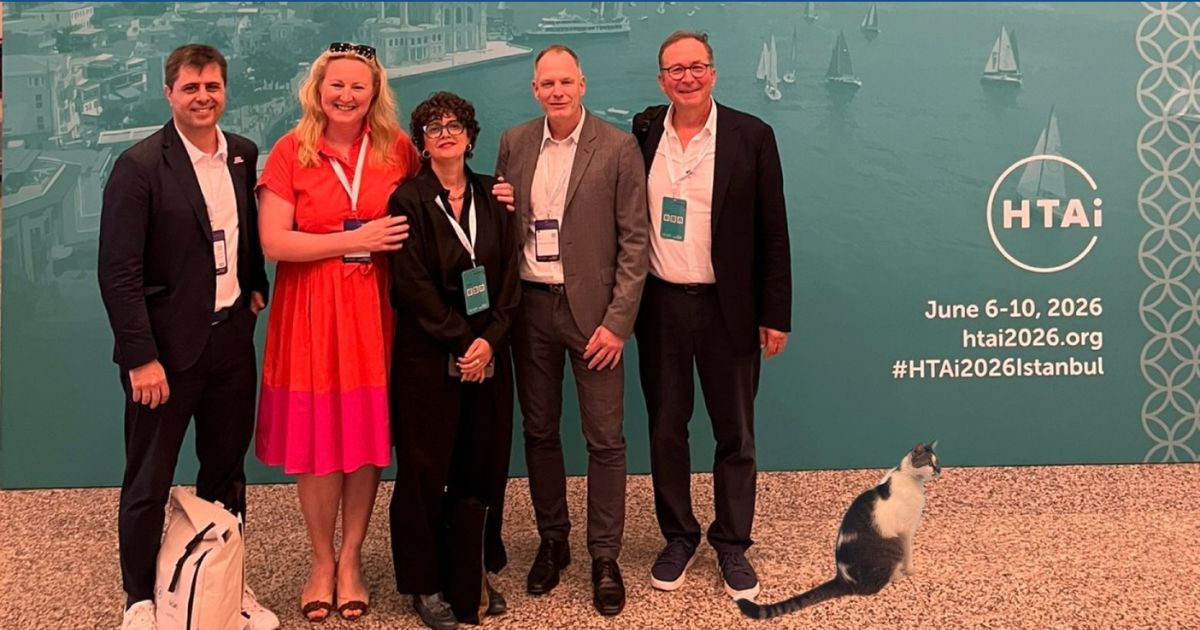
This year, FH Europe Foundation was proud to participate in the HTAi 2026 Annual Meeting in Istanbul for the very first time. Held under the inspiring theme "HTA as a System Shaper", the meeting brought together policymakers, researchers, health economists, clinicians, industry representatives, patients and citizens from across the world to explore how evidence can be transformed into better health systems.
For FH Europe Foundation, this represented an important milestone. As our work increasingly focuses not only on raising awareness of inherited lipid disorders but also on supporting implementation of cardiovascular prevention strategies, engaging with the global HTA community has become essential.
The conference highlighted a profound shift taking place within HTA.
Rather than focusing solely on evaluating individual technologies, HTA is increasingly recognised as a strategic tool for shaping health systems themselves. Discussions throughout the meeting centred on how evidence can support prevention, improve equity, strengthen public trust, accelerate innovation, and ultimately create more sustainable healthcare.
The three plenary sessions reflected this evolution:
Across workshops, scientific sessions and discussions, one message emerged repeatedly: health systems cannot be transformed without meaningful involvement of the people they are designed to serve.
One of the highlights of the meeting was the presentation by FH Europe Foundation and the Lp(a) International Task Force, showcasing how a truly multistakeholder approach can accelerate implementation.
Rather than focusing solely on elevated Lipoprotein(a), the session presented a broader model of collaboration—one where:
Over the past two years, this collaborative approach has transformed elevated Lp(a) from a largely overlooked inherited cardiovascular risk factor into an increasingly recognised public health priority.
Together with clinicians, researchers, health economists, patient leaders, policymakers and implementation experts, the initiative has delivered important milestones, including:
Importantly, participants recognised that this model extends well beyond Lp(a). It offers a practical blueprint for many health challenges where prevention, early detection, evidence generation and implementation must work together.
Among the most powerful moments of the meeting was the contribution of Marc Rijken, FH Europe Foundation Ambassador and patient advocate, who reminded participants that behind every assessment, reimbursement decision and policy recommendation is a person, a family and a life that may be profoundly affected.
Throughout the conference, speakers repeatedly returned to the importance of trust, relationships and co-creation.
As Jennifer Goldsack, CEO of the Digital Medicine Society and herself living with stage IV colon cancer, explained during the opening plenary, even highly educated and well-connected patients can struggle to navigate complex health systems. Her story reinforced an important message echoed across the meeting: healthcare systems must become easier to navigate, more responsive and genuinely centred on people's needs.
Beyond our own session, HTAi 2026 offered a valuable opportunity to learn from colleagues working across many different health systems and disciplines.
Topics ranged from methodological innovation and health economics to digital health, artificial intelligence, sustainability, equity and stakeholder engagement.
We were also delighted to see the launch of the second edition of Patient Involvement in Health Technology Assessment, an open-access resource edited by Karen Facey, Ann Single and Anke-Peggy Holtorf. Bringing together contributions from more than 120 experts worldwide, the publication reflects the remarkable progress made in embedding patient and citizen involvement within HTA and serves as a valuable practical resource for patient organisations, researchers and policymakers alike.
The meeting also provided an excellent opportunity to reconnect with many longstanding collaborators and friends working across cardiovascular prevention, rare diseases and patient advocacy.
Participation in HTAi 2026 reinforced something that has become increasingly clear for FH Europe Foundation.
Building better healthcare is no longer only about generating scientific evidence. It is about creating partnerships capable of translating that evidence into policy, implementation and real improvements in people's lives.
As Europe advances the Safe Hearts Plan and countries continue strengthening cardiovascular prevention strategies, patient organisations have an essential role—not simply as advocates for access, but as partners in shaping health systems themselves.
Our experience in Istanbul demonstrated that when patients, clinicians, researchers, economists and policymakers work together around a shared purpose, evidence becomes action—and action has the power to save lives.
We are grateful to everyone who contributed to this important conversation and look forward to building on the many new partnerships established during HTAi 2026 as we continue working towards more equitable, prevention-focused and person-centred healthcare systems.