
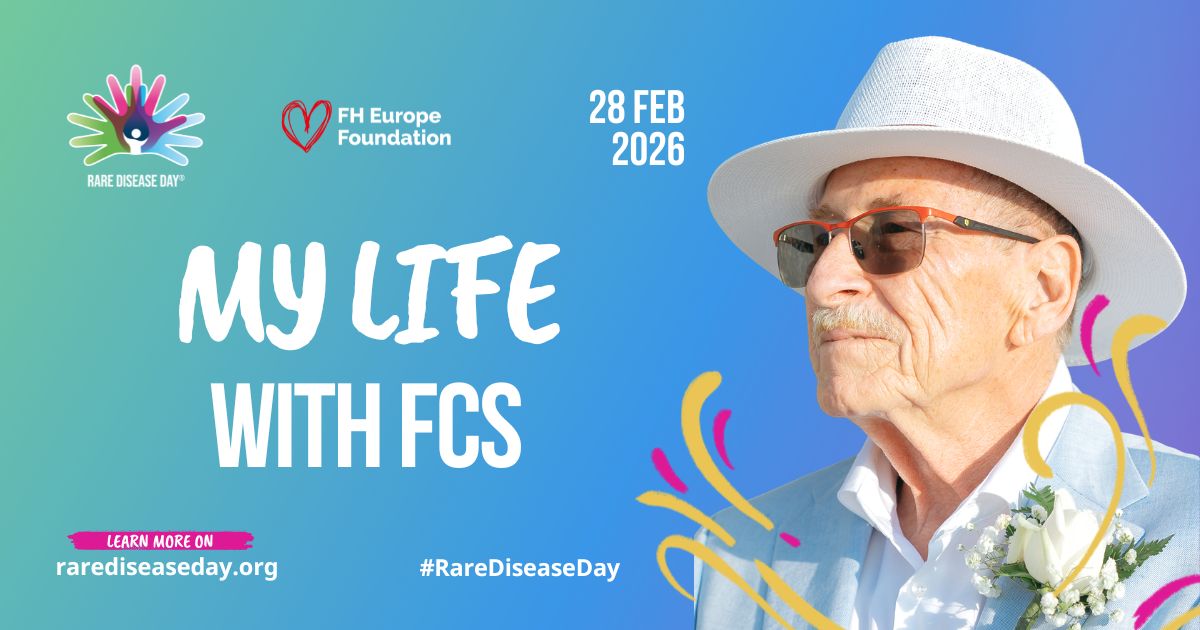
Rare Disease Day shines a light on the everyday realities of people living with rare conditions—including the long search for answers, the impact of delayed diagnosis, and the importance of access to specialised care and effective treatments.
In this interview, Manfred shares his experience living with familial chylomicronaemia syndrome (FCS), a rare genetic disorder that causes extremely high triglyceride levels and can lead to repeated, painful pancreatitis attacks. Looking back over decades of living with the condition, Manfred describes his journey in phases—from years of hospitalisations and uncertainty, to finally receiving a confirmed diagnosis, and eventually gaining access to a treatment that changed his daily life. His story highlights both the challenges many rare disease patients face and the progress that becomes possible when diagnosis, specialist care, and new therapies come together.
Can you tell us a little about your condition and what living with it looks like day to day?
I usually describe my journey in three phases.
The first phase lasted from 1977 to 2015. During that time, my life was marked by recurring severe pancreatic attacks, usually two or three every year. They were extremely painful and often meant hospital stays. I followed a very strict diet and tried many medications, but my triglyceride levels remained extremely high, around 4000 mg/dl.
The second phase began in 2015, when I was finally diagnosed with familial chylomicronaemia syndrome through molecular genetic testing. Until then, doctors had tried to help, but the diagnosis was only something general like hyperlipidaemia, without knowing the exact cause. After the diagnosis, my diet and medications were adjusted. The attacks became less frequent and less severe, and I no longer needed hospital stays, although my triglyceride levels were still between about 800 and over 1000 mg/dl.
The third phase started in 2020. That’s when I began a new treatment, an injection I give myself every two weeks. I still follow a diet, but I haven’t had a pancreatic attack since then. My triglyceride levels are now between 160 and 300 mg/dl. The biggest change is that the constant fear of the next attack is gone.
For me, the hardest part of the journey was getting the right diagnosis.


How would you describe your access to care during that time?
After many years of repeated pancreatic attacks, I realised that managing this condition would only be possible by working closely with doctors and dietitians. In a way, it became a long-term project that we had to solve together step by step.
I have also been fortunate to live in Austria, where the healthcare system offers strong support. My place of residence, insurance, or cost never prevented me from receiving care. Since 2020, I’ve been able to access a newer medication that has significantly improved my condition. Looking ahead, newer treatments may make things even easier, for example with injections needed less often.
I am very aware that access to the right diagnosis and treatment can make a huge difference for people living with rare diseases.
What kinds of support were most meaningful to you, and why?
I was lucky to be treated at a specialised centre, the Vienna General Hospital. When medications and diet alone were not working well enough, doctors there initiated molecular genetic testing, which finally confirmed my condition.
Having experienced specialists involved made a big difference in understanding the disease and finding the right treatment approach.
What would you want other patients to know from your experience?
If you are newly diagnosed or still searching for answers, my advice is to visit a specialised lipid clinic and find a doctor you trust. And if someone tells you that nothing can be done or that you simply need to eat less fat, don’t hesitate to seek another opinion.
FCS can be caused by different genetic mutations, and choosing the right treatment is not always straightforward. That’s why it’s important to work with specialists who have experience with the condition.
You are not alone, and with the right expertise and persistence, it is possible to find better ways to manage the disease.
Do you have a message to policy and decision-makers?
What I would like decision-makers to understand is that getting the right diagnosis should not take decades. In my case, it took 38 years. Of course, when my symptoms started in 1977, the diagnostic tools available today did not yet exist. But now we have the knowledge and technology.
Genetic testing should not depend on financial barriers. When you compare the cost of testing with repeated hospital stays for pancreatitis, earlier diagnosis and targeted treatment make sense, both for patients and for healthcare systems.
For people living with rare diseases, faster diagnosis and access to specialised care can completely change the course of their lives.