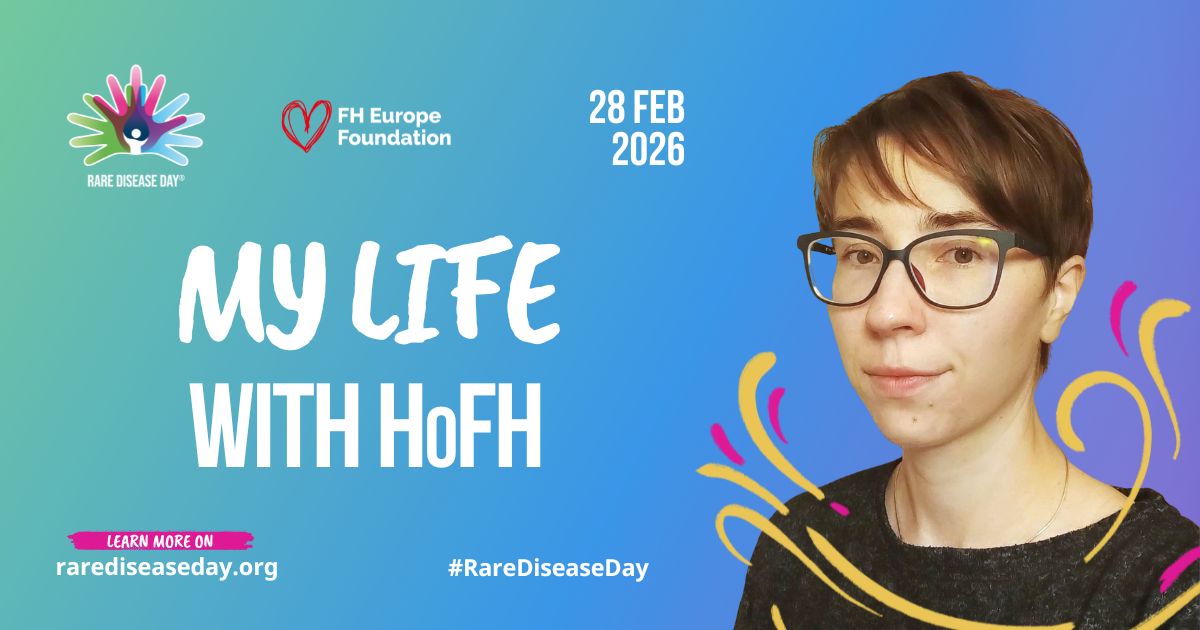
Watch this video to hear Joanna share her journey living with HoFH

Rare Disease Day is a global moment to highlight the realities faced by people living with rare conditions, from delayed diagnosis to limited treatment options and unequal access to care. For many patients, the challenge is not only the disease itself, but also navigating healthcare systems, finding specialists, and gaining access to life-saving therapies.
In this interview, Joanna shares her experience living with homozygous familial hypercholesterolaemia (HoFH), a rare genetic condition causing extremely high cholesterol levels from birth and significantly increasing the risk of early cardiovascular disease. Her story reflects the long journey many rare disease patients face: growing up with limited treatment options, searching for specialists, and relying on determination, family support, and medical progress to access the care they need. Joanna’s perspective highlights why early diagnosis, innovation in treatment, and more predictable access to care are so important for the rare disease community.
The journey: Where it all started
This illness was already known in my family before I was born, because my older sister had symptoms. In the 70s and 80s in Poland, there were no proper treatment options, and the disease turned out to be the most aggressive type. My sister passed away.
When I was born and doctors found the same condition, they could start acting right away. At first, a liver transplant was considered the best solution, but in the 90s in Poland, this area of medicine wasn’t very advanced, so the decision was postponed while doctors searched for other treatments.
I was taking medications that weren’t originally meant to fight cholesterol. They helped a little, and my health was constantly monitored to see whether atherosclerosis was progressing. My case was consulted with doctors across Europe, and medications and supplements were brought in to support me.
I was very lucky and it was also thanks to my family’s dedication. They took care of me every day from a very young age. Because of that, I managed to stay in good condition and reach 36. Now that medicine has advanced and my treatment is better adjusted, I feel much more at peace about my future.
Can you tell us about your condition and what living with it looks like day to day?
It’s a genetic liver disease where the liver doesn’t have the receptors needed to metabolise cholesterol. In a healthy body, cholesterol is captured and processed by the liver. In mine, it isn’t. Right after I was born, my cholesterol levels were extremely high and kept rising, which meant a real risk of atherosclerosis even in childhood.
Lowering cholesterol has always been essential. Today, thanks to medical advances, life is easier than before, but I still have to stay on medication, follow a healthy diet, and remain physically active. All three are necessary and have become part of my everyday life.
I also wish people understood that this is a disease you can’t see. It doesn’t cause pain and may not limit you day to day, but it’s very dangerous: a silent killer. That’s why early diagnosis and access to the right treatment are so important.
On the importance of access to care
One of the hardest moments was realising that my cholesterol was still too high, even with the strongest medications available in my country. Doctors told me we were already at the limit of what was medically possible. I had to live with the hope that medicine would move forward and that new treatments would eventually appear.
I’ve always known that living with a rare condition is different. Other kids could easily get their medication and see local doctors. For me, everything was more complicated, and there was always some obstacle.
Have things like where you live affected the care you were able to get?
Yes, definitely. Years ago, some cholesterol medications weren’t available in Poland, and there were no specialists where I lived. For many years, I had to travel more than 300 kilometres to the capital to receive treatment.
Access to procedures like apheresis was also very limited, and even today it’s only available in a few larger cities.
A lot of it was about searching on our own: reaching out to doctors, foundations, and people who had experience. Someone would help bring medications from abroad, someone else would connect us with the right specialist. It was about constantly looking and building connections.
I’m hopeful because I’ve seen how quickly medicine can move forward. Through joint efforts, we can get treatments to the people who need them.
How did support make a difference for you?
The community around you matters a lot. It’s very hard to keep searching for information and new therapies on your own.
My parents were incredibly committed to protecting my health, and the support from friends and foundations was priceless. Without it, we wouldn’t have made it.
Do you have a message for other patients?
If you ever feel like the situation is hopeless, try not to face it alone. Look for support: a friend, a doctor, a foundation.
The more of us who speak up and show that we’re here, the greater the chance that someone will listen. Even if a disease is rare, the number of people affected is large enough to deserve attention and real action.
Let yourself be seen. There may be someone nearby going through the same thing, and together you can learn more and do more.
Anything you would like to say to policy and decision-makers?
From a patient’s perspective, stability and predictability in access to care are crucial. Living with a rare disease already requires a lot of energy, and complicated or inconsistent access to treatment only adds more stress.
A coordinated system and clear treatment pathway would make a huge difference. Too often, patients have to connect the dots themselves, between specialists, tests, and administrative processes.
It’s also important to involve patients and patient organisations when designing solutions. There are already models to learn from, but what matters most is turning these ideas into real solutions that work in everyday healthcare.